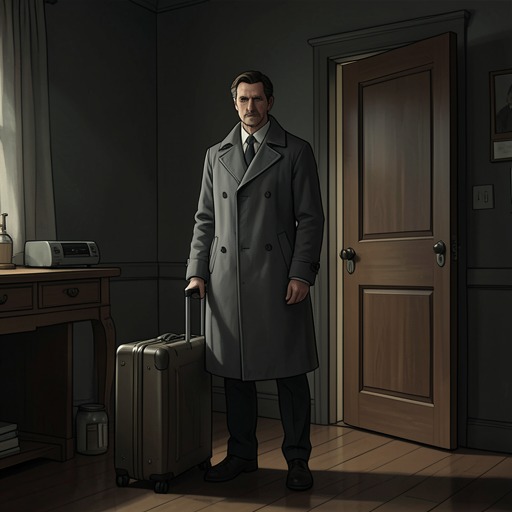
Yao’s depressive episode and life turning point
Nine Perfect StrangersYao’s depressive episode and life turning point begin when several foundations of his life give way in quick succession. After he reaches a psychiatric ward, a doctor identifies the crisis as a major depressive episode; an invitation from Masha then leads him to Tranquillum House, where recovery becomes the basis of a new vocation. The episode thus marks not only a period of illness, but a transition from emergency medical work to a shared project of personal transformation.
Losses and the depressive episode
Just after Yao’s twenty-fifth birthday, his parents announced they were divorcing, sold the family home, and moved into separate apartments. Amid that upheaval, his fiancée, Bernadette, ended their engagement without warning, although the wedding, reception, and honeymoon had already been booked. Yao had believed they were deeply in love, so the breakup felt catastrophic even as he felt ashamed of experiencing it as such. His car was stolen as well, adding a further loss to a period in which his family home, engagement, and familiar sense of security were all disappearing.
Work brought its own strain. After Finn moved interstate, the ambulance service transferred Yao to a regional area where he knew no one and where many call-outs involved violence and drugs. During one call, a man threatened him while demanding that he save a woman who was already dead; when police arrived, the man lunged at them and was shot, and Yao ultimately saved his life. The experience sits within the accumulating pressures that preceded his breakdown, rather than resolving the personal losses already underway.
Yao returned to work, but two days later he woke shortly before his alarm and experienced what felt to him like a catastrophic event in his brain. Believing he might have had a brain bleed, he ended up in a psychiatric ward. When a doctor told him that what used to be called a nervous breakdown was now termed a major depressive episode, Yao replied that nobody had died. The doctor recognized the scale of his distress nonetheless: to Yao, the losses felt like death after death. He received a referral to a psychiatrist and a prescription for antidepressants.
Masha’s invitation and recovery
The day after leaving hospital, Yao received an email from Masha inviting him to visit her new guest rooms if he needed to get away from the rat race. It felt like a sign. He told her he had not been well and might come for a few days to rest. When he arrived, he did not recognize her; she came out onto the veranda, embraced him, and promised to make him well. The encounter later became a model for the welcome he wanted to offer guests arriving at Tranquillum House.
Masha cared for Yao during a three-month period when they were alone at the house. She cooked for him and taught him meditation and yoga, and they practised tai chi together. They did not have sex, but shared what he understood as a journey of rejuvenation. Over that period his body grew stronger as his mind healed, and he experienced a peace and certainty he had not known before. His recovery was not simply a return to his previous routines: he came to think of himself as having shed his former self.
The contrast with his former life was specific. Before arriving, Yao exercised only sporadically, ate too much processed food, worried frequently, and often woke in the night thinking through what might go wrong at work. Afterward, he slept through the night and woke refreshed; thoughts of Bernadette ceased to dominate his private life and eventually disappeared. He came to describe himself as living in the moment and became committed to wellness. The episode therefore altered both his habits and the way he understood what care could accomplish.
From paramedic to Tranquillum House
Masha’s influence also changed Yao’s professional purpose. As a paramedic, he had been occupied with patching people up; at Tranquillum House, he wanted to help transform them as he believed he had been transformed. He regarded the project as almost religious in its force, while grounding its practices in science and evidence-based research. His experience of depression and recovery thus became a personal precedent for the retreat’s promise, and helped shape how he approached new arrivals.
Yao’s parents visited separately and urged him to return to Sydney and get his life back on track. Instead, within six months of his arrival, Masha and Yao opened Tranquillum House to its first guests. The venture proved successful and, in his view, more enjoyable than being a paramedic. What had begun as a possible short visit for rest became a five-year commitment. Delilah joined the staff four years before the later events, and the three colleagues continued refining their retreats. Masha paid Yao generously, and he regarded the work as a dream career.
Significance and limits of the turning point
Yao’s story makes recovery the bridge between a personal crisis and an institutional ideal. His losses and depressive episode lead him to Masha’s care; his experience there becomes the template for the welcome and transformation he hopes to offer others. That trajectory explains why Tranquillum House matters to him as more than a workplace: it is tied to the period in which he experienced a new sense of health, certainty, and purpose.
The account presents the change through concrete contrasts in sleep, exercise, diet, worry, and work, while also showing how completely Yao’s understanding of his future shifted. Yet the evidence establishes his conviction that the retreat’s methods transformed him; it does not make that conviction a clinical conclusion about the treatment or its effects on other guests. His depressive episode remains a serious crisis with psychiatric care, a specialist referral, and antidepressants, even as it becomes the point from which he builds a different life.